Click to read more
Race and Arbitration: The Unspoken Rules of the American Arbitration System
By Genevieve Francois Introduction The American arbitration system is governed by the Federal Arbitration Act, which creates a structure that allows companies to mandate arbitration for dispute resolution. This format forces disputes to be resolved privately rather than in the more public arena of the court system. Mandatory arbitration clauses are often purposefully hidden within…

Effective Vindication in Name Only: How Arbitration Rights Now Depend on Geography
By Braxton Johnson Defendants invoke arbitration to control costs, timelines, and exposure, but courts must still confront a threshold question: will arbitration permit plaintiffs to meaningfully vindicate federal statutory rights? In Italian Colors, the Supreme Court of the United States (SCOTUS) sought to answer this question by recognizing the “effective vindication doctrine,” which bars enforcement…
Recognition and Enforcement of Foreign Arbitral Awards in Vietnam
By Dr. Nguyet Le Background Five years after ratifying the New York Convention 1958 (the NYC), Vietnam enacted its first Commercial Arbitration Law on June 17, 2010 (Law 54). Law 54 differentiates between the annulment review of domestic arbitral awards’ proceedings and the recognition and enforcement of foreign arbitral awards. It remains controversial whether this…
Sustainable Development Compliance in International Investment Agreements: Enforceable at Arbitration?
By Carolina Joy As international investment agreements (IIAs) increasingly include references to the United Nations’ Sustainable Development Goals (SDGs), investor-state arbitration further becomes a site of global governance, mediating conflicts between private investment protection and public development objectives. Within this dispute resolution mechanism, the tension between the soft law of the SDGs and the hard…
Pregnancy, Power, and Procedure: The WNBA Arbitration Clause Meets Its Limits
By Bella DiPalermo When the Women’s National Basketball Association (WNBA) All-Star Dearica Hamby filed a federal lawsuit alleging pregnancy discrimination and retaliation, she did more than bring a personal claim. She revealed a structural tension at the heart of professional sports: the uneasy coexistence between collective bargaining and individual statutory rights. Hamby’s case, which survived…
The Growth of Regional Arbitration Centers: Providing Localized and Efficient Dispute Resolution
By Reagan Powers Over the past few years, regional arbitration centers have grown in popularity, rivaling the historical dominance of the International Chamber of Commerce and the London Court of International Arbitration. The regional arbitration centers aim to provide cost-effective, localized, and efficient dispute resolution. “Two Person Shaking Each Others Hands – Credit to http://homedust.com/”…
Sign to Survive: Arbitration at the Pace of Formula One
By Ryan Zaitoun How much is seven-tenths of a second worth? In Formula One, it can be close to $10 million. Formula One prides itself as the pinnacle of global motorsport, consisting of (as of January 2, 2026) eleven teams, each with two drivers, racing the fastest single-seat open-wheeled cars on tracks across the world.…
Arbitration Without Consent? U.S. Courts Can Force Non-Signatories to Arbitrate, Leaving Arbitrators to Decide Which Claims Will Proceed to Arbitration
By Deborah Slattery-Pereira How U.S. Courts Treat Non-Signatories Parties will subject their disputes “to arbitration if, and only if, [they] actually agree to arbitrate those disputes.” Complex commercial disputes often involve multiple international contracts with different parties, but usually, only two parties sign the arbitration agreement. Because arbitral proceedings depend on a consensual agreement, generally,…
Raytheon on the Hot Seat: What a $950 Million FCPA Case Teaches MNEs About Arbitration and Compliance
By Alexandra Schieferer On October 16, 2024, defense giant Raytheon Company agreed to pay over $950 million to settle allegations of Foreign Corrupt Practices Act (FCPA) violations, defective pricing, and export control breaches, marking one of the largest joint settlements in recent years. This enforcement action illustrates how corruption investigations can spiral into cascading contractual…
Why It’s Time to Include Taiwan in the New York Convention
By Nathan Yost The 1958 New York Convention (“the Convention”) is the cornerstone of international arbitration. With over 170 signatories, it provides a uniform legal framework for the recognition and enforcement of foreign arbitral awards. This predictability is essential to cross-border commerce as it ensures that arbitration outcomes are enforceable, not just symbolic. However, despite…
Should Naming the Arbitral Seat not be Enough?
By Jeremy Hernandez-Lum Tong In 2020 and 2021, the Supreme Court of the United Kingdom (“UKSC”) made two seminal decisions on the law governing arbitration agreements, namely Enka Insaat Ve Sanayi AS v OOO Insurance Company Chubb and Kabab-Ji SAL v Kout Food Group. The latter, Kabab-Ji UKSC, recapitulated the reasoning in Enka, but differed…
Contracting a Womb: The Necessity of an Arbitration Clause
By Brenna Callahan In 2025, it is difficult to imagine a world without surrogacy. Celebrities like Kim Kardashian and Andy Cohen have ushered society into a new era of contracting a womb. The practice benefits same-sex couples and women with prohibitive health conditions. However, its popularity has only recently reached the masses. In the early…
The Role of Arbitration in Maritime Security Contracts: Risk Allocation and Enforcement Challenges in High-Risk Zones
By Ayoola Babatunde Fadola Introduction Given the complexities of global shipping, maritime security contracts help protect ships, cargo, and human life in hostile seas. These standardized contracts, which cover risks such as piracy, armed robbery, and terrorism, often pose significant challenges for risk sharing and dispute resolution. This essay considers the roles of arbitration in…
The Evolving Landscape of Consumer Arbitration: Lessons from Coinbase, Ticketmaster, and Disney
By Jack Moore Last year was a busy one for arbitration in the United States. The Supreme Court decided three cases in 2024 pertaining to arbitration, the Ninth Circuit decided another, and in August, a high-profile dispute involving the Walt Disney Company brought the word “arbitration clause” into the popular conversation. The landscape of consumer…
How the UAW Used Arbitration to Protect Their Members
By Kevin Lauro Workers make the world go round. They build bridges, fix broken bones, and dispose of trash. Traditionally, we think of the relationship between a worker and their employer as one in which the employer gives the worker a job. However, the employer can also take that job away, but what if the…
Artificial Intelligence in Arbitration: Sh-AI-ping the Future
By Philip Winkle Introduction If you grew up watching science fiction, you probably expected the robot takeover to resemble The Terminator, I, Robot, or The Matrix. But, instead of battling automatons or desperately hacking the algorithm trying to override humanity’s destiny, this Brave New World is really just you—someone working in or studying international arbitration—staring…
U.S. Courts Will Not Deny Enforcement of an International Award Even if Corruption Tainted the Contract
By Deborah Slattery-Pereira In August 2024, the 11th Circuit addressed the role of U.S. Courts in recognizing non-domestic awards when one of the parties alleged that corruption tainted the contract. This case involved a breach of contract dispute between Commodities & Minerals Enterprise, Ltd. (“CME”), a commodities intermediary trader under the laws of the British…
RWE AG and RWE Eemshaven Holding II BV v. Kingdom of the Netherlands and Themes in Climate Change Arbitration
By Yonah Wasik, Senior Staffer Climate change presents an expanding danger to the environment and human health. Along with it, international bodies and states alike have progressively strengthened their climate change goals and regulations. While most climate change cases are brought before national courts, businesses have turned to arbitration to resolve environmental disputes, especially for…
What Growing Global Polarization Means for Cooperation in International Arbitration
By Kaley Gilbert, Senior Staffer Increasing global conflict challenges international arbitration’s ability to successfully settle commercial disputes. Arbitration depends on cooperation. But the polarization associated with growing global conflict, ranging from active conflicts such as Russia’s invasion of Ukraine to the cold conflict between the United States and China, challenges the norms and practices that…
London’s Legal Renaissance: Revamping the UK’s Arbitration Act
By Lucas Vieweg, Articles Editor London, the iconic British capital city, has an impressive and storied history; it is a cosmopolitan city where artists, inventors, financiers, and tourists cross paths every day. Its landmarks are instantly recognizable, and its ever-present status as a world city is undisputed. However, what truly sets London apart is its…
Click on a blog to read more.
Now We Have “Bad Blood”: Anti-Trust Arbitration in the Taylor Swift Era
BY: Amy Liu, Junior Staffer In November 2022, Ticketmaster faced major political and public scrutiny after its systems malfunctioned during ticket sales to Taylor Swift’s sixth concert tour, the Eras Tour. On November 15, 2022, when the sale went live, Ticketmaster’s platform crashed within the hour, which logged out users or froze them in queues.…
Keep readingBalancing Acts: The Profit Potential and Pitfalls of Investor-State Dispute Settlement
by: Shannon Moloney, Articles Editor Investor-state dispute settlement (“ISDS”) provisions provide investors and nations with a framework to arbitrate issues that arise under both bilateral investment treaties (“BIT”) and free trade agreements (“FTA”). Investors often pursue damages against host countries that are parties to international treaties with ISDS provisions if host nations do not abide…
Keep readingSilencing Gig Workers: Arbitration and Misclassification in the Gig Economy
By: Jacqueline Vanacore, Senior Staffer The rise of the gig economy, accompanied by the proliferation of mandatory arbitration agreements requiring gig workers to waive their rights to litigation, has not only hindered gig workers’ ability to resolve workplace disputes but, in the absence of a statutory framework, has contributed to their struggle to be classified…
Keep readingA Tiger Shrimp Among Whales
By: Brian Hwang, articles editor “In a fight between whales, the shrimp’s back gets broken” is an old Korean proverb reflecting on a history of geopolitical squeeze. Within the past seventy years, the Republic of Korea (“ROK”) experienced rapid industrialization and unprecedented economic growth. Although the country is still a newcomer in the international arbitration…
Keep readingRussian Invasion of Ukraine Brings an Influx of Arbitration in LNG Disputes
By: Erin Moloney, Articles Editor Liquified natural gas (“LNG”) disputes are rising due to increasing pressures from the global energy market following the Russian invasion of Ukraine, leading to price increases, an influx of arbitration, and environmental concerns. LNG, a natural gas and cleaner alternative to oil and coal, is rapidly increasing in demand. In…
Keep readingWhat We Can Learn from the Notorious P&ID v. Nigeria
By: Emily Granja, Junior Staffer On October 23,2023, England’s High Court of Justice ruled in favor of the Federal Republic of Nigeria in Nigeria v. Process & Industrial Developments Ltd. (P&ID). Reviewing the case, the High Court vacated P&ID’s $11 billion arbitral award after finding significant evidence of fraud and bribery. While the High Court’s…
Keep readingArbitration and Climate Change: What we can learn from the ECT’s attempt at modernization
By: Scarlett Horn, Senior staffer Multilateral institutions and treaties, such as the United Nations Framework Convention on Climate Change (“UNFCCC”) and the Paris Agreement, set ambitious goals to mitigate and respond to the rapid increase of the average global surface temperature. Addressing climate change requires international cooperation, leading to the establishment of multilateral institutions and…
Keep readingThe Hong Kong Exodus: How Corporate Relocation Shapes the Landscape of International Commercial Arbitration
By: Isha Jadhav, Junior Staffer Many United States (“U.S.”) and Western companies are relocating out of Hong Kong, a long-revered hub for financial institutions. The question at hand is whether this so-called “exodus” impacts the scope of commercial arbitration within Hong Kong. Hong Kong has been a popular arbitral seat for many years partially because…
Keep readingSalary Arbitration in Baseball Contracts
By: Caitlen Moser, Junior Staffer In December 2023, two-way baseball player Shohei Ohtani and the Los Angeles Dodgers agreed to the largest player contract in sports history, with Ohtani set to earn seven hundred million dollars over the next ten years. Unique in the modern era, Ohtani is both one of the best pitchers and…
Keep readingThe Tightrope Walk of FTAs: Balancing the Relationship Between Foreign Investments and Public Interests
By: Savannah Kelly, Senior Staffer Investors have the right to protect their investments just as host states have the right to protect public interests–otherwise recognized as public interest regulation. The balance between the rights of investors and that of states skews off-kilter when arbitral proceedings whittle away or strip entirely the regulatory autonomy of states.…
Keep readingForced Arbitration in Tesla’s Consumer Contracts
by: Abby Hug, Senior Staffer The Federal Arbitration Act (FAA) reflects a federal policy that strongly favors arbitration for resolving disputes, especially regarding written agreements between a buyer and seller. Arbitration appeals to organizations because arbitrators tend to issue results that favor the company that hired them, it is cheaper than litigation, and keeps product…
Keep readingBrazilian Congress and Supreme Court will analyze the Arbitrators’ Duty to Disclose in the Brazilian Arbitration Act
By: Deborah Slattery-Pereira, Senior Staffer Brazil enacted the Brazilian Arbitration Act (“BAA”) in 1996, adopting the United Nations Commission on Trade Law (“UNCITRAL”) Model Law. Brazilian courts played an active role in supporting arbitration proceedings and recognizing arbitration as a constitutional alternative dispute resolution mechanism. Now, the issues of arbitrators’ duty to disclose and increased…
Keep readingGoldman Sachs and 1MDB Arbitration
By: Benin Lee, Articles Editor In early October 2023, Goldman Sachs filed a suit against the government of Malaysia in the London Court of International Arbitration (LCIA). This developing case serves as an informative resource on contemporary arbitration developments while stimulating discourse on the advantages of LCIA arbitration and the strategic decisions made in international…
Keep readingArbitration at the ILO: A New Mechanism
By: Yonah Wasik; Senior Staffer In over 100 years of international arbitration, courts have settled only one labor arbitration case. In April 2013, the Rana Plaza Factory in Dhaka, Bangladesh, collapsed and killed over 1,100 workers in the garment industry, injuring many more. By 2018, the Permanent Court of Arbitration (PCA) oversaw and settled the…
Keep readingSo, You Think You Can Arbitrate?
By: Aissatou Toure; Articles editor Arbitration is in demand. In 2023 alone, complainants brought 7,554 new cases into arbitration. Before becoming an arbitrator, one must know what arbitration entails; however, arbitration evades easy definition. The World Intellectual Property Organization defines arbitration as: “a procedure in which a dispute is submitted, by agreement of the parties,…
Keep readingWhat the Penn Plaza Decision Means for a New Generation of Union Workers
By: Dominic Charles On June 23, 2023, Starbucks Workers United (Union) announced that 3,500 workers would strike in retaliation to Starbucks’ corporate policy ordering stores to remove all LGBTQ+ decorations. The Union’s concern over the needs of its LGBTQ+ members reflects a diversifying union workforce in which two-thirds of workers are women and/or people of…
Keep readingNavigating Policy Shifts in Investor-State Dispute Settlement in Latin America: A Case Study of Colombia
By: Jake Helfant States have historically utilized provisions for Investor-State Dispute Settlement (“ISDS”) to secure foreign investment, ensuring that disputes with foreign enterprises are governed and processed outside of the jurisdiction of sovereign states. Bilateral Investment Treaties (“BITs”) and Free Trade Agreements (“FTAs”) typically include ISDS provisions, mandating arbitration through the International Center for Settlement…
Keep readingThe Future Is Now: AI In Arbitration
By: Nathaniel Chaij, Senior Articles Editor Artificial intelligence (AI) has swiftly become a household discussion in recent years as it shakes up industries from education to international arbitration. AI has already begun to help organizations streamline their operations, reduce costs, and make better decisions. In the last ten years, AI has seen exponential growth in…
Keep readingThe Future of Mandatory Arbitration Clauses in Employment Contracts
By: Marimar Seda, Senior articles Editor Employment arbitration is a method of resolving issues between an employer and an employee in an out-of-court setting. Arbitration has been around for a long time but was first codified in 1925 with the passage of the Federal Arbitration Act (FAA). Congress passed the FAA, to establish a foundation…
Keep readingNot So Friendly Skies: The Impact of Social Media on Private Aviation Arbitration
By: Aissatou Toure; Junior Staffer On April 9, 2017, on a warm Sunday afternoon in the Chicago O’Hare airport, a United Airlines flight was bound for Louisville, Kentucky. The airline overbooked the flight when it added four deadheading crew members to the flight. The deadheading crew is a flight crew that is transported by an…
Keep readingThe New Trend of Waiving Confidentiality in Arbitration Proceedings
By: Adaeze Mgbeahuru; Junior Staffer Confidentiality is an essential part of arbitration and dispute resolution. Parties engage in arbitration and dispute resolution because of the core element of confidentiality. However, in recent times, parties in international commercial and investor-state arbitration proceedings are increasingly waiving confidentiality during and after arbitration. Recently, most institutional arbitration proceedings are…
Keep readingWill Arbitration Lead to an Increase in Energy Investment in Ecuador?
BY: BENIN LEE; JUNIOR STAFFER In 2022, the International Energy Agency released a statement claiming that the world may in fact be in the middle of its first true “global energy crisis” based on the dwindling supply of major oil producers. The crisis, along with the push toward the expansion of clean sources of energy,…
Keep readingThe Importance of Specifying the Law Governing Arbitration Agreements to Prevent Conflicting Interpretations in Parallel Proceedings
“Specifying the choice of law in an arbitration agreement would enable the parties to be conscious of the legal system binding their arbitration and be aware of the validity and enforceability of their arbitral awards in different jurisdictions.”
Keep readingThe Power of the Purse: Why Promoting Gender Diversity is Key to the Future of International Arbitration
By: Mala Stauder; Junior Staffer A lack of diversity among appointed arbitrators has been a longstanding presence in the international arbitration community. Achieving gender diversity specifically proved to be a consistent challenge, yet its resolution remained a low priority for years. The international arbitration arena often wastes the most qualified talent when excluding women. In…
Keep readingShield against Accountability: How Russia Avoids Honoring Arbitration Awards While Being Tied Up with War and Sanctions
By: Cecilia Li; Junior Staffer In June 2015, Everest Estate LLC and several other Ukrainian companies (“Claimants”) commenced United Nations Commission on International Trade Law (“UNCITRAL”) arbitration proceedings with the Permanent Court of Arbitration (“PCA”) in The Hague against Russia pursuant to the 1998 Ukraine-Russia bilateral investment treaty (“Ukraine-Russia BIT”). The Claimants contended that Russia,…
Keep readingWhat Would the End of McCarran-Ferguson Mean for Arbitration?
By: Dominic Charles; Junior Staffer With the passage of the Competitive Health Insurance Reform Act (CHIRA) of 2020, on January 13, 2021, Congress signaled that the world of insurance arbitration may soon change dramatically. Competitive Health Reform Act of 2020, PL 116-137, January 13, 2021, 134 Stat 5097; James W. Lowe McCarran-Ferguson Act Amended Repeal…
Keep readingSpain’s Renewable Energy Disputes: Renewable Energy Needs Reliable Arbitration
By: Aloke Prabhu; Junior Staffer Spain’s decade-long war with foreign investors over the changes to its renewable energy policy in 2010 continues as the country seeks to annul tens of millions in awarded damages. The story of Spain’s disputes will likely discourage investors’ confidence in international investments in renewables for the foreseeable future. These cases…
Keep readingCalifornia Gets Creative: How AB 51’s Future May Shape State Regulation of Arbitration
By: Scarlett Horn; Junior Staffer The United States (“U.S.”) Supreme Court has used cases such as Concepcion and Lamps Plus to establish its preference for enforcing arbitration clauses, including those that waive the right to class actions in consumer and employment contracts. Despite the pro-arbitration trend, California has remained undeterred in its resolve to avoid…
Keep readingFrozen French Fries and the MPIA: The future of appeals at the WTO?
By: Colin McGinness; Junior Staffer In late December 2022, the World Trade Organization (WTO) decided on a seemingly routine case regarding the trade of frozen french fries between Colombia and the European Union (EU). Colombia accused several countries within the EU of ‘dumping’ frozen french fries and other frozen potato products into the Colombian market.…
Keep readingThe Complex World of International Arbitration and Eventual Enforcement
Recently, in a decision issued by the Court of Justice of the European Union, in the case of Slovak Republic v. Achmea, intra-EU bilateral investment treaties’ (“BIT”) arbitration clauses were declared to be in violation of governing European Union (“EU”) law and therefore illegal. The court stated “that the arbitration clause in the BIT [between Slovakia and the…
Keep readingAmy Coney Barrett on Arbitration: Solidifying a Pro-Business SCOTUS
Sworn into the Supreme Court on October 27, 2020, the third Supreme Court nominee from President Donald Trump is poised to set a conservative supermajority on the highest court. Justice Amy Coney Barrett, a judge from the 7th Circuit Court of Appeals, took the seat vacated by Ruth Bader Ginsburg, who had passed away on September…
Keep readingEmergency Arbitration: The Unsung Hero of International Arbitration
Emergency arbitration. You know it, you…probably don’t think much about it, honestly. But the introduction of emergency arbitration is one of the most important recent changes in the field of international arbitration. Many parties agree to international arbitration because they would prefer to avoid local or national courts, some because bringing a case to court can be…
Keep readingInclusion of Emergency Arbitrations: A Step in the Right Direction?
The Arbitration and Conciliation Act, 1996 (“the Act”) provides for interim reliefs from both Courts and Arbitral tribunals. However, the latter has the authority to grant these reliefs only after its formation. Accordingly, both these procedures, under normal circumstances, have proved to be quite lengthy in nature. Thus, in order to provide urgent relief to the parties,…
Keep readingLimitation Period for Enforcing Foreign Awards: Is the Confusion Settled?
On September 16, 2020, the Indian Supreme Court in Government of India v. Vedanta Ltd (‘Vedanta’) settled the ambiguity regarding the applicability of the limitation period for the enforcement of foreign arbitral awards in India. In the year 2008, arbitral proceedings were initiated between Government of India (‘GOI’) and Vedanta Ltd., with Malaysia as the seat. Subsequently,…
Keep readingArbitration in Times of Restrained Social Relations Due to the COVID-19 Pandemic
The year 2020 will be remembered in history as the year in which humanity faced the COVID-19 pandemic. It seems that it will remain our day-to-day concern for some time with devastating effects on the economies of developed and developing countries all around the world. Another consequence of the pandemic is that many domestic judicial…
Keep readingIndia-Brazil BIT: A Step in the Right Direction
On January 26, 2020, Brazilian President Jair Bolsonaro was the chief guest during India’s 71st Republic Day Parade. Later that week a strategic partnership was formed between the countries as India signed a bilateral investment treaty (BIT) with Brazil to further develop relations between the two states on both a cultural and commercial level. Recently,…
Keep readingNew Decade, New Demographic? Increasing Diversity in International Arbitration
Middle Eastern and African countries are no strangers to arbitration. The International Centre for Settlement of Investment Disputes (ICSID) published in its 2020 Caseload Statistics showing that the Middle East, North Africa, and Sub-Saharan Africa together account for 26% of all cases. In its 2017 Special Focus on Africa Report, ICSID reported that 22% of…
Keep readingThe Impact of COVID-19 on Arbitration
COVID-19 has already impacted almost every industry. Many in-person communications are moving online via teleconferencing and videos. The economic markets in nearly every country are being enormously affected, supply chains have been halted, and many employees can no longer go to work to manufacture products. These major changes to the world economy will no doubt…
Keep readingThe Potential Tribulations of the China International Commercial Court (CICC)
In 2013, China’s President, Xi Jinping, announced the “New Silk Road,” which would be the largest infrastructure development from East Asia to Europe. It was later coined as the Belt and Road Initiative (BRI). The Belt and Road would consist of not only physical infrastructure but also fifty special economic zones. To date, roughly 60…
Keep readingThe Role of Arbitration in the US-China Trade War
Arbitration plays a background role in the US-China trade talks, but is it being used to its highest potential? The US-China trade war is the broad name given to a series of ongoing negotiations over mutual access to consumer markets and the onus of the trade deficit between The United States and China. After a…
Keep readingThe WTO’s Dispute Settlement Crisis
“The World Trade Organization is in crisis” is a statement that has practically become the new WTO motto. This particular global organization is comprised of 164 member states and was created on January 1, 1995. The provisional agreement and organization, the General Agreement on Tariffs and Trade (GATT) preceded the creation of the WTO. While…
Keep reading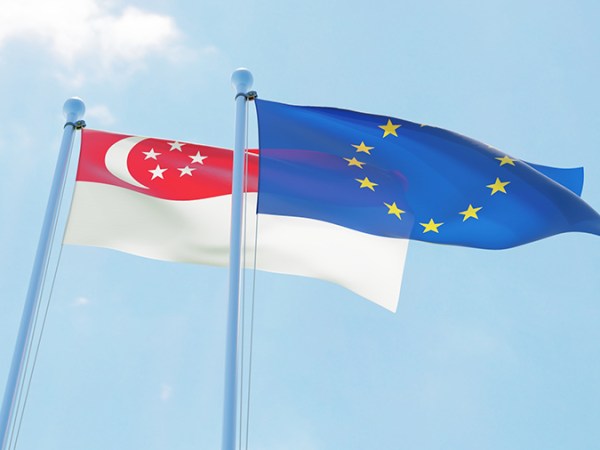
An Overview of the EU-Singapore Free Trade Agreement
The European Union-Singapore Free Trade Agreement (EUSFTA), a bilaterally beneficial trade agreement, was finally implemented on November 20, 2019, after ten years of negotiations. Talks began in 2009, with the Good and Services negotiations and investment protection negotiations ending in 2012 and 2014, respectively. EUSFTA was signed in October 2018, and approved by the European…
Keep reading
Arbitration in the United Kingdom after Brexit: For Better or For Worse?
The United Kingdom has been working to officially remove itself from the European Union since 2017, in an ongoing political effort commonly known as “Brexit.” This separation arises from several goals, including granting the United Kingdom the ability to act more freely in its legal system and overall lawmaking. What impact will this have on…
Keep reading
AAA Ruling: Taking a Hard Line on Doping Infractions
Performance enhancing drugs have had a persistent place in sports for decades, and their utility has only increased as athletic achievements have been monetized. From Maradona and Armstrong to countless other athletes, long term health has taken a back seat to the glory of winning and the money that comes along with it. This storyline…
Keep reading
The Power of the FAA after Lamps Plus
This past spring 2019, the Supreme Court brought a new interpretation to the field of U.S. arbitration. A challenge for workers but a gift for employers, Lamps Plus v. Varela has more loosely applied the waiver of class action arbitration in the Federal Arbitration Act. The FAA was enacted in 1925 to relieve pressure on…
Keep readingLa Convención de la Haya sobre Ejecución de 2019 y el efecto en la selección del arbitraje internacional como método de resolución de conflictos
Editor’s Note: This piece is part of our on-going Spanish-publication series. English Language Summary: On 2 July 2019, the delegates of the 22nd Diplomatic Session of the Hague Conference on Private International Law signed the Final Act of, and thus adopted, the 2019 Convention on the Recognition and Enforcement of Foreign Judgments in Civil or Commercial…
Keep reading
The FAIR Act: Bringing Consent Back to Arbitration
The House of Representatives passed the Forced Arbitration Injustice Repeal Act (“The FAIR Act”) on September 20, 2019, and the legislation has been introduced into the Senate. The FAIR Act’s purpose is to “prohibit pre-dispute arbitration agreements that force arbitration of future employment, consumer, antitrust, or civil rights disputes.” This opens up judicial system access…
Keep reading
Las Reglas De Praga y la Eficiencia de los Procedimientos
English Language Summary: Traditionally, international arbitration proceedings have been conducted under the influence of the common law and its adversarial system. Some factors identified as contributing to the increasing cost of arbitration proceedings include document production, fact witnesses and party-appointed experts. As a solution, a group of arbitration practitioners from civil law countries drafted The…
Keep reading
Arbitration Council of India: A Step Forward or Backward?
Significant changes have come this year to the Indian arbitration regime. A primary source of these changes can be seen through the insertion of Part 1A in the Arbitration and Conciliation Act, 1996 (“ACA”) which prescribes for the establishment of the Arbitration Council of India (“ACI”). These amendments were based on the report of the…
Keep reading
The Achmea Judgment and its Repercussions
On January 15, 2019, a group of distinguished arbitrators, practitioners, and academics got together at American University Washington College of Law to discuss the most important decisions involving States in 2018. While the event consisted of two panels — one on disputes between States and the other on investor-State disputes — there was a decision…
Keep reading
Chinese Africa Joint Arbitration Center: A Solution to Trade Disputes between Africa and China
The increasing trade and investment cooperation between China and Africa, as well as the diversity of individual legal systems across African countries, create a growing need for neutral and cost-effective mechanisms for resolving commercial disputes between African and Chinese parties. These factors prompted the establishment of the Chinese Africa Joint Arbitration Center (CAJAC), which aims…
Keep reading
Incorporation of Arbitration Rules by Reference: Clear and Unmistakable Evidence of an Intention to Delegate the Authority to Arbitrate?
When questions about who should decide issues related to the existence, scope or validity of an arbitration agreement arise, the key rule is that “courts should not assume that the parties agreed to arbitrate arbitrability unless there is ‘clear and unmistakable’ evidence that they did so.” First Options of Chicago, Inc. v. Kaplan, 514 U.S.…
Keep reading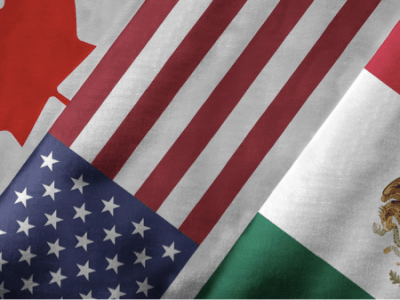
Expected Changes to ISDS Mechanisms under the USMCA
Upon its ratification by all parties, the new United States-Mexico-Canada Agreement (USMCA) will make substantial changes to the former North American Fair Trade Agreement’s (NAFTA) investor-state dispute settlement (ISDS) mechanisms found under Chapter 11. US-Canadian investments will experience the most dramatic changes due to the complete elimination of Chapter 11 ISDS mechanisms. There are big…
Keep reading
 The Arbitration Brief