By Yonah Wasik, Senior Staffer
Climate change presents an expanding danger to the environment and human health. Along with it, international bodies and states alike have progressively strengthened their climate change goals and regulations. While most climate change cases are brought before national courts, businesses have turned to arbitration to resolve environmental disputes, especially for international disputes. However, the role of arbitration in climate change dispute resolution is unclear. Recent cases, such as RWE AG and RWE Eemshaven Holding II BV v. Kingdom of the Netherlands, help define the potential implications of environmental regulation on the state’s obligations under existing investment treaties.
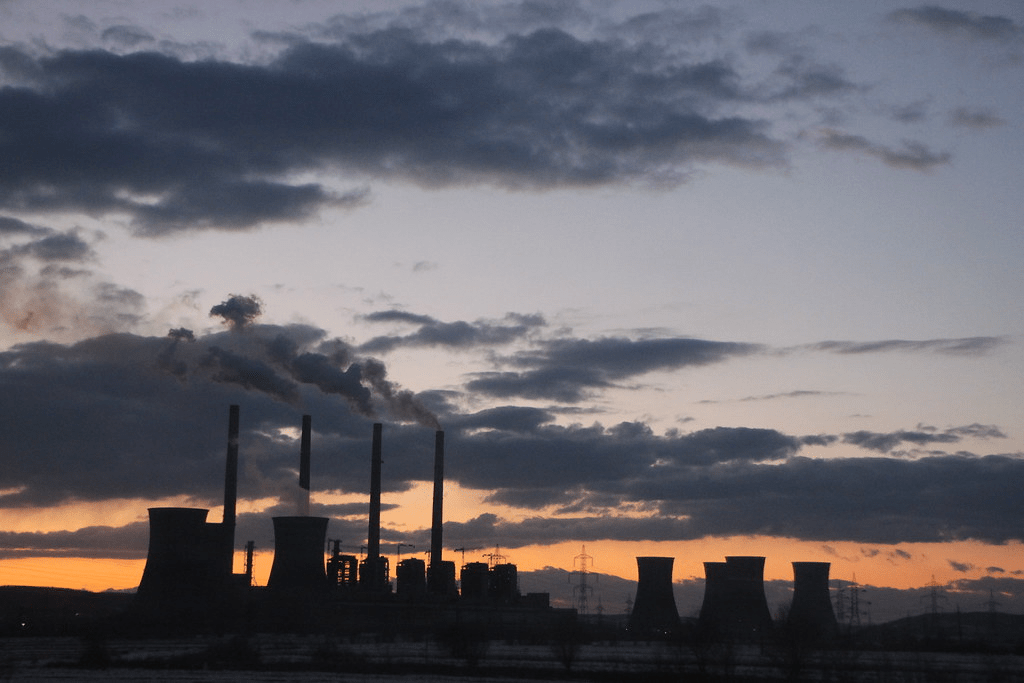
In 2019, the Netherlands enacted the Coal Ban Act. This act required energy operators to phase out coal power plants by 2025 or 2030, depending on the plant’s efficiency. If the power plant has less than 44% electrical efficiency, it must be phased out by 2025, and if more than 44% efficiency, then it must be phased out by 2030. In doing so, the Act provides no financial compensation for the phase-out or any lost revenue incurred. RWE is a German holding company with 100% ownership in coal power plants in the Netherlands and felt that the new regulation deprived them of significant revenue. In 2021, RWE initiated arbitration proceedings against the Netherlands, alleging that the new regulations caused them €1.4 billion in damages. RWE sought arbitration under the Energy Charter Treaty (“ECT”) at the International Centre for Settlement of Investment Disputes (“ICSID”). The ECT is a multinational treaty signed by 49 states and the European Union, designed to encourage investor-state activity in the energy sector. In Article 10, the parties agree to promote and protect foreign investments by creating “stable, equitable, favorable and transparent conditions for investors of other contracting states.” Furthermore, Article 13 grants protection against “expropriation without compensation,” meaning the state cannot unduly burden the investor without paying them for the burden. The ECT also specifically provides for arbitration procedures. Specifically, Article 26 of the ECT directs investors to ICSID as a forum for investor-state arbitration.
When deciding if the Netherlands violated Article 10 and Article 13 of the ECT, the ICSID arbitration panel relied heavily on the doctrine of “foreseeability.” “The foreseeability test is commonly applied in investment decisions involving balancing of an investor’s legitimate expectations and the State’s right to regulate.” Tribunals commonly examine legitimate expectations concerning the risks the investor knew or should have known when investing. RWE may not have been aware of the Coal Ban Act at the time of their investment, but the ICSID tribunal considered the 2015 Paris Climate Accord and the increasing global efforts to reduce carbon emissions as factors that RWE should have been aware of prior to the 2019 enactment of the Coal Ban Act. Continuing use of the foreseeability test could lean in favor of further regulation, so long as the regulation is foreshadowed or part of a large movement and is not overly burdensome.
“While most climate change cases are brought before national courts, businesses have turned to arbitration to resolve environmental disputes, especially for international disputes.”
Yonah Wasik
In July 2023, the German Federal Court of Justice determined that they had jurisdiction over the case, that the arbitration was inadmissible under German and European law, and that the case would not be upheld or enforced by either of those bodies of law. The German Court attained jurisdiction because one of the parties was a German company and analyzed the ECT’s arbitration clauses’ congruence with the law applying in Germany. The Court determined that, although the ECT and ICSID sought to make arbitral awards sui generis (of its own kind or class) in nature, no investor-state arbitral award is truly sui generis and is thus subject to the domestic law of at least one of the states involved. After determining that they could hear the case, the Court found that parts of the arbitration clause in the ECT violated both German and European law. The court determined that Article 26 of the ECT was contrary to section 1023(c) of the German Code of Civil Procedure and cited the Komstoy case from the Court of Justice of the European Union. Thus, the court ruled that the arbitration was inadmissible. This presents a serious “chilling effect” and a potential problem for European investors and states seeking to engage in international energy investment. It seems that because arbitral awards would be subject to domestic and European law, investors are limited to only those procedural routes as agreed upon by both the ECT and domestic and European law. Furthermore, on June 28, 2024, EU member states decided that Article 26 of the ECT does not apply to intra-EU investor-state disputes. This could potentially dissuade European energy investment in other European states. By October 2023, both parties agreed to discontinue the case according to Rule 44 of the ICSID.
Overall, investor-state climate arbitration continues to grow. As it grows, some warn that the strict admissibility rules and foreseeability test exemplified in RWE AG and RWE Eemshaven Holding II BV v. Kingdom of the Netherlands might lessen the amount of foreign investment in Europe or might slow public interest regulatory action by states. However, as investment treaties adapt to a changing world, more require that tribunals recognize international climate agreements and goals. Thus, foreign energy investors could be held to stricter standards in the future or avoid arbitration altogether through mediation or limiting emissions on their own.

