By Ryan Zaitoun
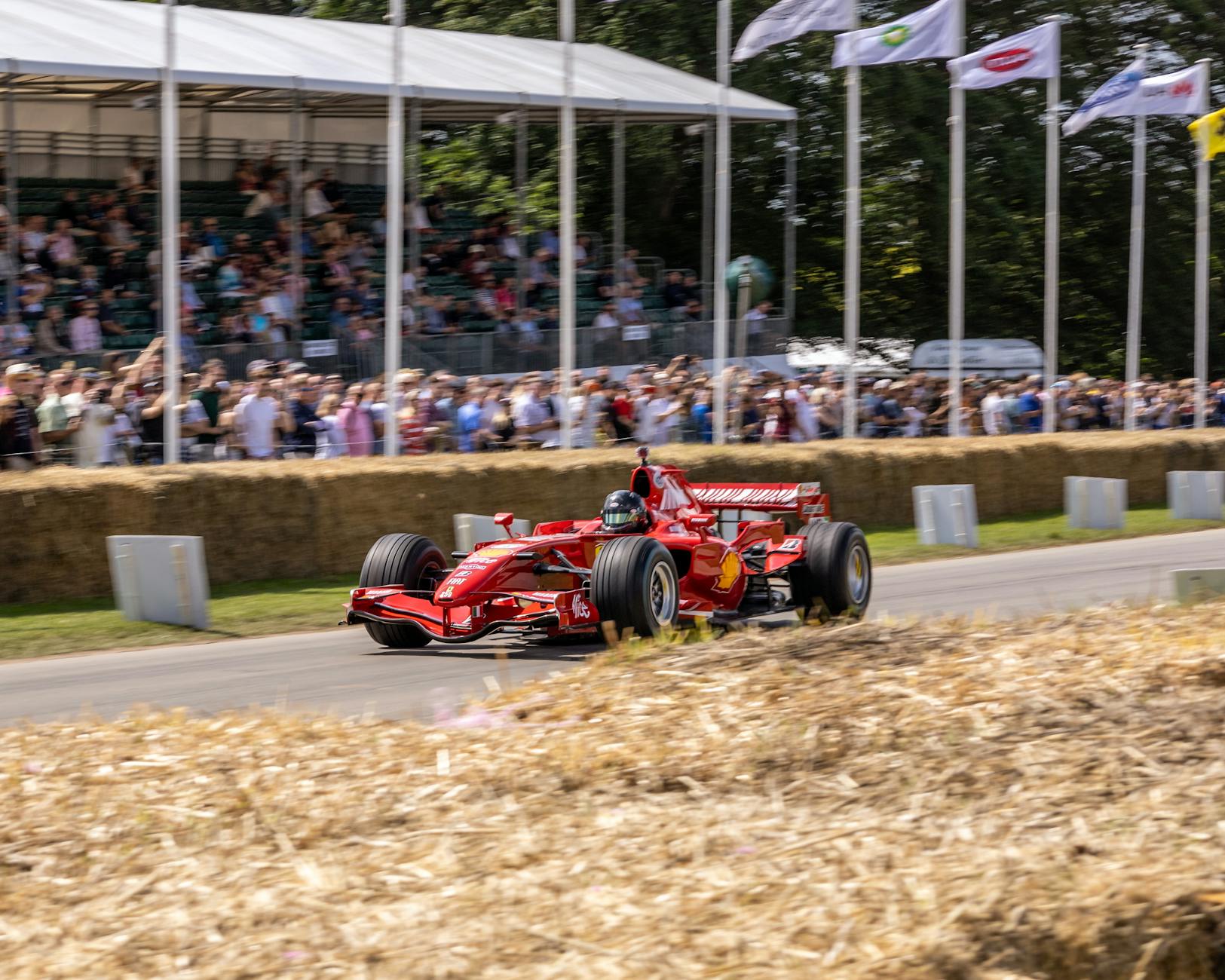
How much is seven-tenths of a second worth? In Formula One, it can be close to $10 million. Formula One prides itself as the pinnacle of global motorsport, consisting of (as of January 2, 2026) eleven teams, each with two drivers, racing the fastest single-seat open-wheeled cars on tracks across the world. Arbitration in Formula One offers quick solutions to contract disputes for a sport where time can become literal money. This blog will discuss Formula One’s Driver Contract Recognition Board (CRB), and what other sports arbitration bodies can learn about the efficiency of this arbitration body for a sport all about razor-thin margins of time.
The CRB was created by Formula One’s governing body, the FIA (Fédération Internationale de l’Automobile) after a controversy involving Formula One legend Michael Schumacher’s surprise move to the Benetton F1 team in 1991. Before the CRB, disputes where a Formula One driver was contracted to drive were subject to state courts, which made such issues tedious and possibly inconsistent. The CRB’s purpose was to act as a body to which all teams must submit their driver contracts to for review, and in cases of disputes, grant speedy resolutions concerning which team a driver is signed to race for in any given Formula One season. Its awards and proceedings are confidential, making information about the CRB’s structure and decisions extremely limited and reliant of leaked information, motorsport lawyer blogs, or information rendered public via court filings and announcements. Since its founding, CRB has decided on only four disputes. John Hand, Head of Legal at Red Bull Racing, commented that this underscores how rare such disputes are in Formula One and suggests the body’s existence encourages good practice among teams and drivers.
In 2022, Formula One driver Oscar Piastri was in a heated dispute with his former team, Alpine, as he attempted to enforce a contract with his new team, McLaren, to drive for them in 2023. Piastri had been part of Alpine’s driver development program while also under contract as the reserve driver for the team. Alpine took their dispute to the CRB, where Alpine claimed they had a contract to retain him for the 2023 Formula One season. The CRB heard the case on August 29, 2022 and, four days later, unanimously held that Piastri did not have a contract with Alpine and was free to drive for McLaren in 2023. Notably, the entire duration of this dispute occurred between two back-to-back race weekends, a time where both Alpine’s and Mclaren’s team resources would be dedicated to race logistics and protocol. Thus, a quick hearing and decision allowed for both teams to maintain resources on their weekend performance.
While arbitration in sports offers quick resolutions, it is frequently criticized for its potential to issue unfair rulings by placing biased arbitrators in positions of power. Additionally, sports arbitration bodies tend to create concerns about due process, since arbitrated decisions are often unappealable because of their conclusivity. Criticisms over biased arbitrators and due process infringement was evident during the 2024 Paris Olympics, where USA Gymnast Jordan Chiles had her bronze medal revoked following a Court of Arbitration for Sport (CAS) ruling. The decision was effectively final and unappealable, despite possible conflicts of interest concerning the panel’s president, and the inadmissibility of evidence contrary to the ruling.
Similarly to the CAS, the CRB’s decisions are final and conclusive, with no appeals process. However, concerns over biased arbitrators have not been documented throughout the CRB’s history, likely attributed to how its members are selected independently and diversly. Additionally, the CRB’s authority is limited purely to decide issues where a driver is contractually obligated to drive in the next season and not disputes involving the terms of contracts. As described in Walkinshaw & Ors. v. Diniz (1999), the CRB is a contract recognition board and not a contract disputes board, and its rulings are effectively limited to only one or two questions: whether a contract exists, and if multiple exist, which was signed first? This limited scope for the CRB’s authority helps reserve parties’ rights to due process, as recognized in international human rights law, while respecting the CRB’s conclusive authority over what contract a driver is obligated to drive under. This scope therefore allows “off-the-contract” suits to arise from the same arbitrated dispute. For instance, two years following the CRB’s finding in Piastri’s case, the former Alpine Team Principal Otmar Szafnauer suggested that in an English Court of Law, they could have recovered on the basis that Piastri was unjustly enriched by the team developing him under the expectation he will eventually drive for them. Instead, after the CRB’s decision, Alpine found a remedy by settling with McLaren to release Piastri on undisclosed terms.
“By adopting similar measures to the CRB, like keeping arbitrator selection independent and narrowing the scope of an arbitration body’s authority, other sports arbitration bodies can better align with the fast-paced nature of sports while reducing the likelihood of controversial decisions and preserving due process.”
Ryan Zaitoun
Overall, the CRB’s utility to Formula One as a fast and focused arbitration body reflects the sport’s rapid pace while safeguarding the ability to resolve off-the-contract driver disputes elsewhere, like in state courts of law as suggested by Otmar Szafnauer. Resolving disputes, like Piastri’s in a matter of four days and between race weekends ensures that the arbitration process does not interfere with a team’s capacity to compete in the sport, when a team’s limited resources would otherwise be dedicated to part development, race strategy, and logistics between racing venues. Further, arbitration specific to drivers in Formula One must be fast because the sooner a contract is finalized, the sooner a driver can start working with their new team for the upcoming season. Every week a driver is able to speak with engineers, to every minute they can test a car on a track can influence whether a team has the extra seven-tenths of a second to finish first; and in 2025, the estimated first place prize amounted to $175 million, $11 million more than the prize for second and $23 million more than the prize for third.
Other sports arbitration bodies can learn from the CRB’s balancing act between speedy arbitration and focused authority. John Hand’s blog noted that other motorsports, like MotoGP and IndyCar have considered adopting a similar type of body to save teams money with lawyering fees. By adopting similar measures to the CRB, like keeping arbitrator selection independent and narrowing the scope of an arbitration body’s authority, other sports arbitration bodies can better align with the fast-paced nature of sports while reducing the likelihood of controversial decisions and preserving due process.
 The Arbitration Brief