By Nathan Yost
The 1958 New York Convention (“the Convention”) is the cornerstone of international arbitration. With over 170 signatories, it provides a uniform legal framework for the recognition and enforcement of foreign arbitral awards. This predictability is essential to cross-border commerce as it ensures that arbitration outcomes are enforceable, not just symbolic. However, despite having one of the most advanced economies in East Asia and a robust legal system, Taiwan remains outside the Convention.
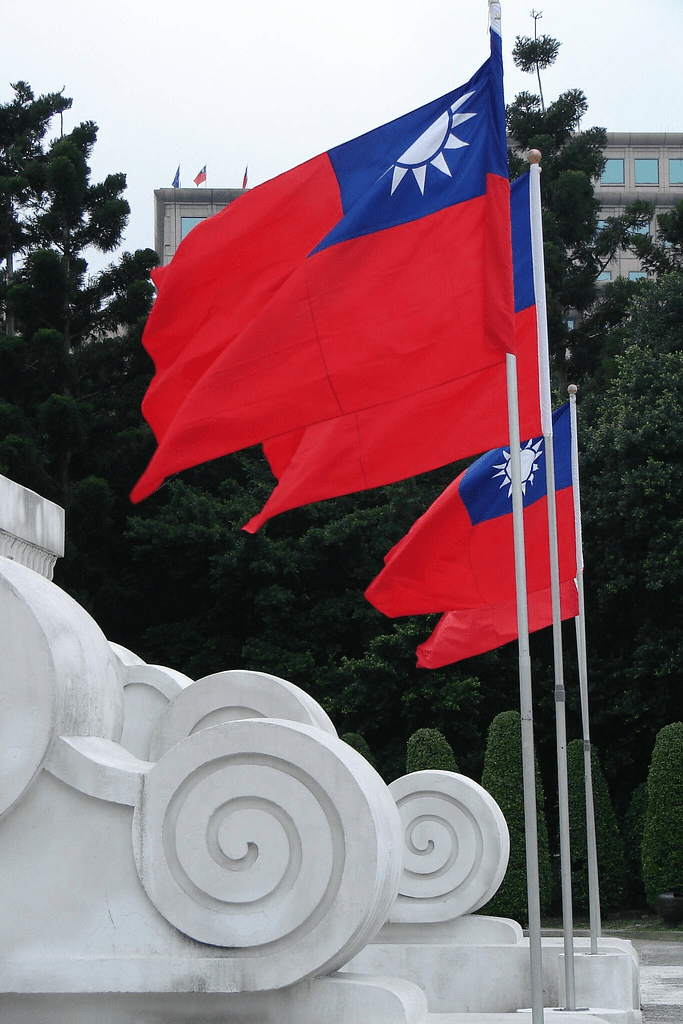
"Taiwan's flags" by quasarsglow is licensed under CC BY-NC-SA 2.0.
Taiwan’s exclusion is not due to any substantive failing in its legal system. In fact, Taiwan’s approach to arbitration is aligned with international best practices. The real reason Taiwan is not a party to the New York Convention is political: as the treaty is deposited with the United Nations, Taiwan cannot accede due to the UN’s recognition of the People’s Republic of China as the sole representative of “China.”
Taiwan’s Arbitration Framework
Taiwan’s arbitration law, enacted in 1998, was modeled in part on the UNCITRAL Model Law. It offers a neutral, modern framework with minimal court interference, enforceability of arbitral awards, and procedural safeguards. Taiwanese courts consistently support arbitration. In a Taiwanese High Court decision from 2022, the court recognized that foreign arbitral awards can have the same effect as final judgments, provided that they meet basic standards of due process and do not contravene public policy. This decision exemplifies Taiwan’s functional adherence to the New York Convention’s goals, even in the absence of formal accession.
In addition to its legal framework, Taiwan has built strong institutional infrastructure. The Chinese Arbitration Association, Taipei (CAA) has long served as a center for commercial arbitration. Its international affiliate, the CAA International Arbitration Centre (CAAI), based in Hong Kong, reflects a strategic effort to make Taiwan’s arbitration services accessible to a broader international audience. Both institutions operate under rules aligned with international norms by appointing arbitrators with cross-border expertise and ensuring impartial procedures.
The Consequences of Exclusion
Despite the sophistication of Taiwan’s local arbitration procedures, Taiwan’s exclusion from the New York Convention has tangible consequences. Arbitral awards issued in Taiwan are not automatically enforceable in Convention states. Similarly, foreign awards granted under the Convention’s regime are presumptively not enforceable in Taiwan.
This creates legal uncertainty. For parties contracting with Taiwanese entities, the lack of Convention coverage may increase risk and reduce predictability. For Taiwanese businesses, the absence of reciprocal enforcement protection can weaken their ability to resolve cross-border disputes efficiently. The result is a patchwork of enforcement strategies, often dependent on local laws or judicial discretion rather than treaty-based guarantees.
On a systemic level, Taiwan’s exclusion also weakens the global enforcement regime the Convention was designed to establish. The New York Convention is intended to provide a universal standard. Excluding a jurisdiction that substantively complies with that standard, solely on political grounds, undermines the Convention’s credibility and neutrality. It blurs the line between legal principle and geopolitics in a system that depends on consistency and legal certainty.
“The continued exclusion of Taiwan from the New York Convention is not a matter of legal readiness, but of diplomatic inertia. That exclusion creates inefficiencies, undermines reciprocity, and erodes the universality of the Convention itself.”
By Nathan Yost
Pathways Toward Inclusion
There are feasible solutions that would allow Taiwan to participate in the Convention’s framework without requiring changes to its international status. The most straightforward option is a politically neutral accession model. This approach has precedent: Taiwan acceded to the World Trade Organization in 2002 under the name “Chinese Taipei”. This allowed Taiwan to engage fully in the international trade system without requiring formal recognition of statehood. A similar naming convention could be adopted for the New York Convention, enabling accession while preserving the existing diplomatic balance.
Alternatively, countries could pursue bilateral or multilateral enforcement arrangements with Taiwan. Some jurisdictions, such as Vietnam and China, already recognize Taiwanese awards on the basis of reciprocity or de facto equivalence. Expanding such arrangements, through legislative measures or judicial interpretation, could reduce the enforcement gap.
While these measures do not provide the legal certainty of Convention membership, they offer a pragmatic interim solution.
Conclusion
Taiwan’s legal and institutional framework for arbitration is fully aligned with the objectives of the New York Convention. Its courts enforce foreign awards, its institutions conduct international arbitrations, and its legislation reflects global best practices. The continued exclusion of Taiwan from the New York Convention is not a matter of legal readiness, but of diplomatic inertia. That exclusion creates inefficiencies, undermines reciprocity, and erodes the universality of the Convention itself.
Whether through accession under a neutral designation or through practical workarounds, the international community should find a way to incorporate Taiwan into the Convention. Doing so would not only benefit Taiwan and its commercial partners but also reinforce the Convention’s core purpose: to ensure fair, predictable, and efficient enforcement of arbitral awards across borders.
 The Arbitration Brief