By: Brian Hwang, articles editor
“In a fight between whales, the shrimp’s back gets broken” is an old Korean proverb reflecting on a history of geopolitical squeeze. Within the past seventy years, the Republic of Korea (“ROK”) experienced rapid industrialization and unprecedented economic growth. Although the country is still a newcomer in the international arbitration arena, it is quickly rising the ranks and vying to cement itself as one of the premier arbitration jurisdictions in the region. The current commercial arbitration landscape is either concentrated in affluent European nations, e.g., Paris and Geneva, or in the case of Asia, dominated by regional institutions with more experience and clout, such as Hong Kong and Singapore. This article will examine the legal framework through which the ROK aims to strengthen its popularity and competitiveness as an international arbitration center.
The Korean War, which partitioned the north and south of the Korean Peninsula, ushered Western capitalism into the ROK, catalyzing labor-intensive manufacturing industries. Moreover, the government’s hyper-centralized development model revolving around high export quotas complemented the burgeoning commercial activity in the region at the turn of the century. The 1997 Asian Financial Crisis was a blessing in disguise, forcing fattened conglomerates to achieve financial stability by liquidating and disposing of assets, with many of these cross-border deals incorporating arbitration clauses. This initial wave of high-value, complex commercial disputes sparked a chain of systemic reforms and rule changes.
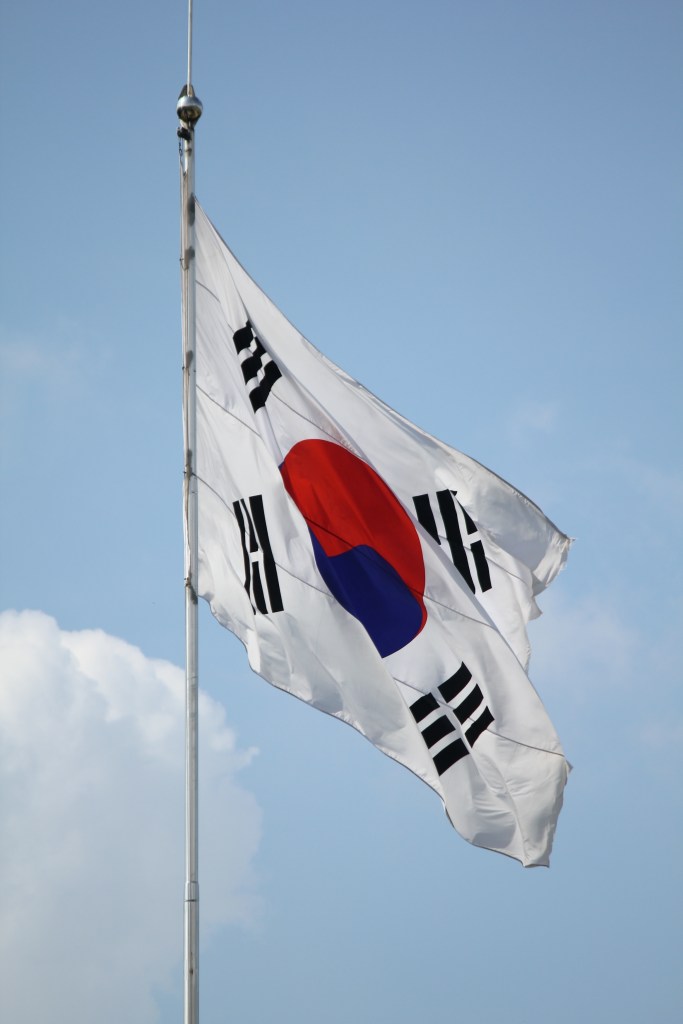
The Korean Arbitration Act was first established in 1966, amended in 1999 based on the United Nations Committee on International Trade Law (“UNCITRAL”) Model Law, and then revised once more in 2016 to capture the language and trends of the 2006 Model Law. The ROK was one of the first Asian countries to implement the Model Law and has consistently, albeit delayed, amended its rules corresponding to updated versions. This provides its Western counterparts with a more familiar and stable structure for a fair resolution of arbitration disputes.
Likewise, the Korean Commercial Arbitration Board (“KCAB”) was founded in 1970 as the country’s primary arbitration organ. In 2011, the KCAB enacted new sweeping rules to better accommodate foreign parties and increase its international presence by allowing for expedited procedures. For instance, if a claim amount does not exceed 200,000,000 KRW (equivalent to about 150,000 USD), the arbitrator issues the award within three months, facilitating a quick resolution to proceedings and reducing transaction costs associated with arbitration. Efficient enforcement of awards seems to be a forte of the KCAB; recognizing arbitral awards requires only a “decision to enforce,” rather than a court judgment via an oral hearing. In addition, awards can only be set aside by a judgment and require heightened scrutiny, thereby restricting the courts from overturning judgments.
[T]he judiciary regularly provides training for matters of international arbitration. Government and judicial support further buttress the ROK as an arbitration center by strengthening the rule of law, making it an attractive alternative in the region.
Brian Hwang
The government has been gung-ho about expanding commercial arbitration, enacting the Arbitration Industry Promotion Act in 2016 and establishing KCAB International in 2018 to broaden further the scope of commercial dispute resolution across transnational borders. Perhaps even more supportive of arbitration are the courts themselves. Interim measures, which protect the interests of the parties and uphold the integrity of the arbitration process, are obtained with greater ease than in other jurisdictions. Provisional attachment orders may also be requested on an ex-parte basis. Korean courts also have a high rating for independence and are relatively free from bias or corruption. Lastly, the judiciary regularly provides training for matters of international arbitration. Government and judicial support further buttress the ROK as an arbitration center by strengthening the rule of law, making it an attractive alternative in the region.
Looking at the numbers, these reforms have ultimately borne fruit. In 2019, the KCAB administered 373 domestic and 70 international cases; in 2020, it administered a total of 405 cases comprising 336 domestic and sixty-nine international cases; and in 2021, it reached a caseload record with 500 cases comprising 540 domestic and 50 international cases. Despite the decreasing trend of international cases, the efficiency and transparency of the Korean arbitration model, coupled with civil law jurisprudence, will continue to appeal to foreign parties.
Korean parties have been more active in the international arbitration sphere than their neighbors China and Japan despite being significantly smaller in most relevant measures, such as landmass, population, economy, or volume of trade. Throughout the two-decade period from 1998 to 2008, Japan and China were involved in 422 and 499 ICC arbitrations, respectively; the ROK, in the same time span, participated in 665 ICC arbitrations.
As one of the four “Asian tigers” of the late twentieth century, the ROK hopes to compete with regional arbitration centers. Its economic resilience and aspirations in the field of international arbitration embrace the majestic nature of its national animal: the tiger.
 The Arbitration Brief